

 Image 1 of 1
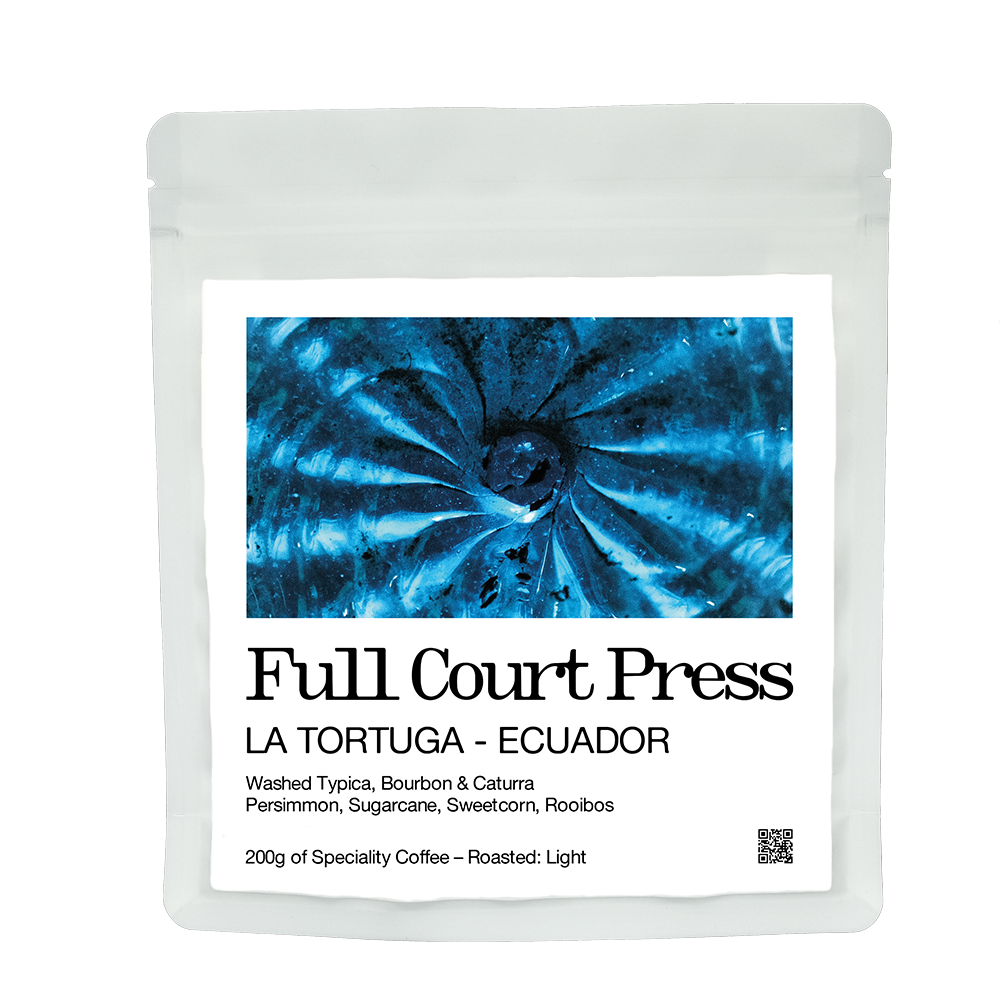
Origin: Ecuador - Galapagos Islands
Process: Washed
Varieties: Bourbon, Typica & Caturra
Importer: Caravela
Harvest: 2025
Altitude: 250-401 MASL
Per-Kilogram green price: £30.29
Amount purchased: 30kg
La Tortuga is a coffee characterised for its unique and magical geographic location. The Galapagos Islands are a beautiful Ecuadorian archipelago of volcanic islands located in the Pacific Ocean, 906km from continental Ecuador. The Galapagos are famous for being the place where Darwin developed his theory of evolution, due to the vast number of unique species that he found there during his voyage in 1836, including the famous 100-year-old giant tortoises.
Galapagos is not only home to birds, sea lions, iguanas, dolphins, and gulls, but also to the exotic coffee of La Tortuga. The Cooperativa de Cafetaleros de Galapagos, composed of more than 80 producers, started in 1997 with the purpose of protecting the coffee industry while conserving the natural environment. All the farmers in the Galapagos are very conscious of the animals and plants that inhabit the island. In fact, they consider themselves temporary inhabitants and strongly believe that the real owners of the land are the animals and the native plants.
For generations, coffee cultivation has been a tradition passed down among Galápagos producers. However, the region presents unique challenges. On one hand, the delicate island microclimates, despite their rich soils, make coffee farming difficult. On the other, transporting supplies and raw materials to and from the islands is a constant logistical hurdle.
In Galápagos, coffee producers begin by manually selecting ripe cherries, often hiring local workers trained to identify cherries ready for picking. After harvesting, the cherries are taken to the on-farm wet mill, where they undergo pulping, typically with minimal or no water. Following pulping, the coffee is fermented, with producers using traditional tanks or, more recently, airtight containers. The fermentation process varies between 14 to 18 hours, depending on the farm’s practices and weather conditions. Some producers use water in the process, while others omit it.
After fermentation, the coffee is washed two to three times before moving to the drying phase. The coffee is initially dried in shaded areas to remove excess moisture, followed by drying in covered facilities. This process can take 15 to 30 days, depending on farm characteristics and weather conditions. Once the coffee reaches the desired humidity level, it is prepared for final analysis.
A mobile lab is transported to the Galápagos, where a thorough physical analysis is performed on a representative sample, measuring moisture content, water activity, and identifying any physical defects. Afterward, the coffee undergoes a sensory evaluation to determine its quality grade. Finally, the coffee is airlifted to mainland Ecuador, where the parchment coffee is processed at Caravela's mill in Quito before being prepared for shipment to the port.